BDS Trec
Thought about originally as a low key event that could be entered by all ages, all types of animals and vehicles, BDS Trec was based on the French Techniques de Randonnée Équestre de Compétition which is a competition designed to test horse and rider. With origins in France, the sport spread through Europe, and was introduced to the UK by the BHS in 1998. The Ridden Trec competition consists of three separate events – mounted orienteering, a demonstration of control of the horse’s paces and an obstacle course – all completed over the course of one or two days, and points scored, with the highest scoring being declared the event winner.
BDS Trec Phase 1 Presentation
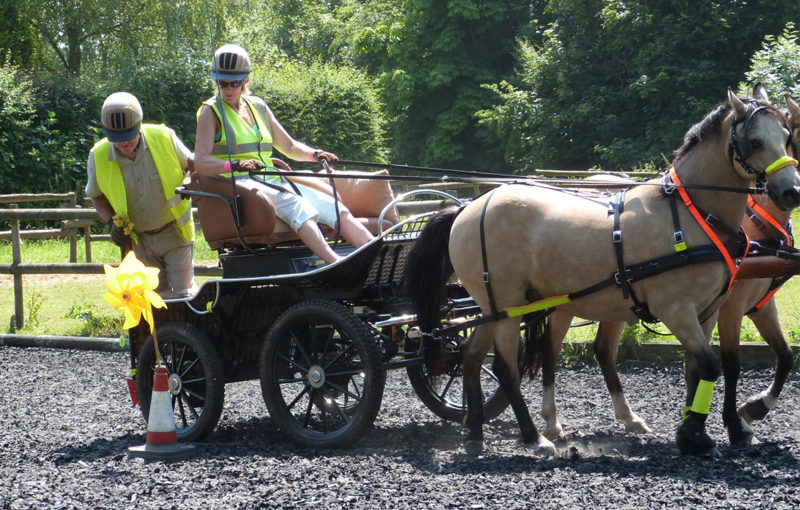
A mark out of 10 is given for the the pony, harness, driver and groom and finally the carriage. 10 being the most perfect and 0 being the worst score. The total marks for all 4 presentation sections are added together and subtracted from 40 to give the total number of penalties for the presentation phase. This is the score entered on the main mark sheet.
The Pony
Should be clean, with mane and tail untangled. Shoes should not be loose or excessively worn. Feet must be picked out and, to obtain top marks, oiled inside and out.
He should be neither over nor under weight. No sleepies in his eyes and clean nostrils.
He should appear capable of doing the job ahead of him and be well mannered.
The Harness
Should fit well to both the pony and the carriage. Ideally, it should not be on the first or last hole giving room for adjustment.
It should be very clean and ideally match.
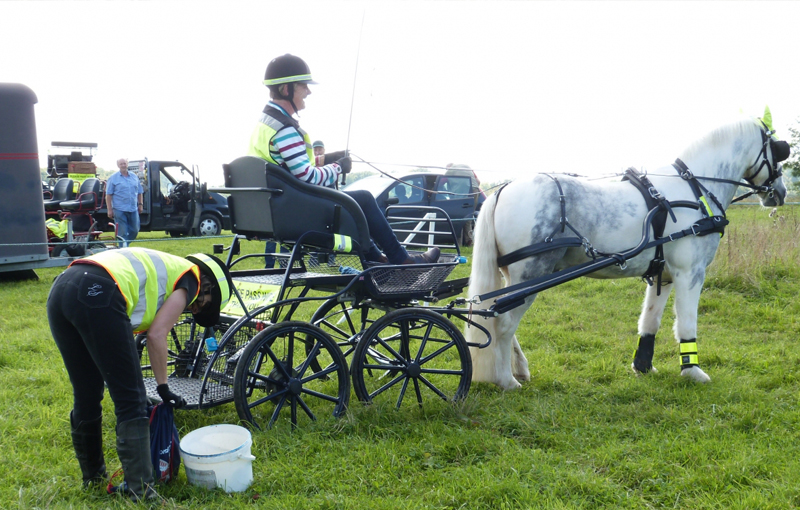
Hi viz and quick release clips are positively encouraged. As is plaiting the bridle in or using gullet straps.
If using a 2 wheeled vehicle or a carriage with fixed shafts, it should have a sliding back band. Independent shafts need to have a fixed back band or some way of preventing it from moving (Conway buckles).
The line of draft from the collar to the swingletree must not be interrupted by the belly band, breeching straps or trace carriers. The trace should pass between the belly band and the girth for 2 wheeled vehicles and outside for 4 wheelers. Also with 4 wheeled vehicles, the belly band should pass through the keeper (if present) on either side at the bottom of the panel of the driving saddle.
In the two wheeled set up, the belly band must be tight enough to prevent the shafts crossing over the pony’s back but loose enough to allow for balance.
You should be able to get 3-4 fingers breadth ways depending on the size of the pony, in-between
the seat of breeching and the pony’s quarters level with his stifle when the carriage is in draft. The straps must not be wrapped more than once around the shaft to take up the length. Parrot/scissor clips if used must be of the correct type/strength.
The length of traces should allow the back band, tugs and belly band to lie in a straight vertical line on the saddle.
The bit should be checked for width, especially where the cheek piece billets pass through the eyes of the bit.
It should be the correct height in the pony’s mouth.
His eyes should be in the centre of the blinkers.
Contact details on a dog tag type disc fixed to the harness is a great idea.
The Driver and Groom
Both should wear hard hats and gloves (brown are correct for carriage driving).
They should wear appropriate footwear (not trainers) and hi viz, again, is positively encouraged.
The whip must be in the driver’s hand at all times. It should be long enough to reach the horse’s nearside shoulder from the box seat.
A mobile phone must be carried by the driver or groom and not in spares kit.
Full marks will be given to well turned out, matching clothing.
The Carriage
Must fit the pony well, be clean and fit for purpose.
If using breast collar harness, a swingletree must be used.
If using a 2 wheeled vehicle it must be well balanced.
All shaft furniture, swingle tree, adjustable shafts must be checked for any looseness.
Brakes must work and not bind.
Pneumatic tyres must have enough air and clincher or bonded rubber tyres must not be loose.
It must have reflectors to the rear. The more hi-viz the better, including on the side or shafts.
It should have a comprehensive spares kit which is easily accessible and the groom should have some knowledge of how to use it. The lead rein should not be in the spares but kept close to the groom and not coiled up.
Full marks will go to a clean, shiny carriage with good paintwork, hi-viz to the sides and the rear, flashing lights, possibly a tracker fitted.

Phase Two – A Test Of Timed Distance
or a Optimum Time Cones course
On return from the drive each turnout will individually tackle
Phase Three – The Skills
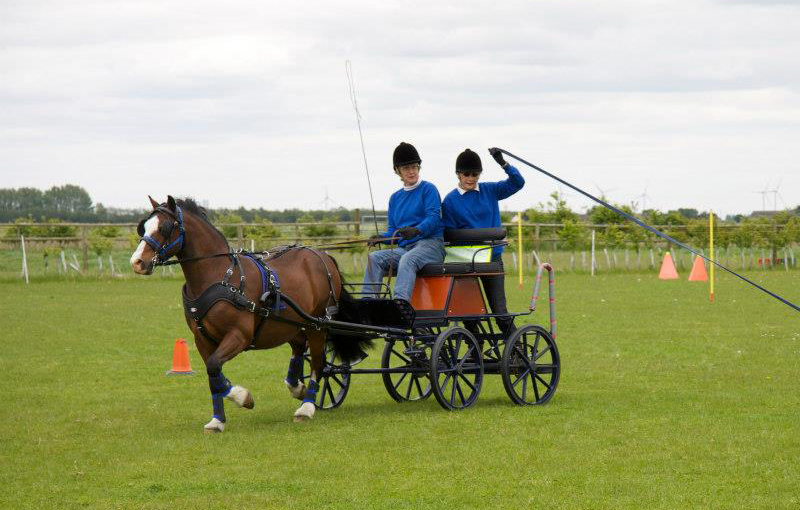
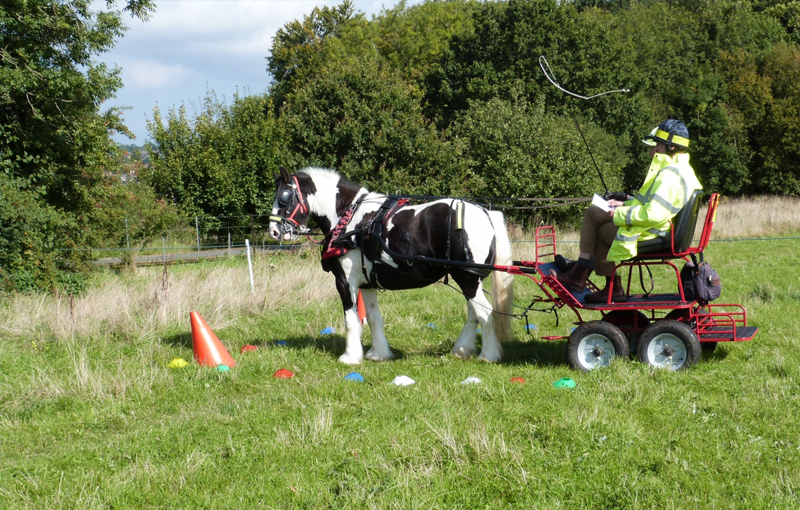
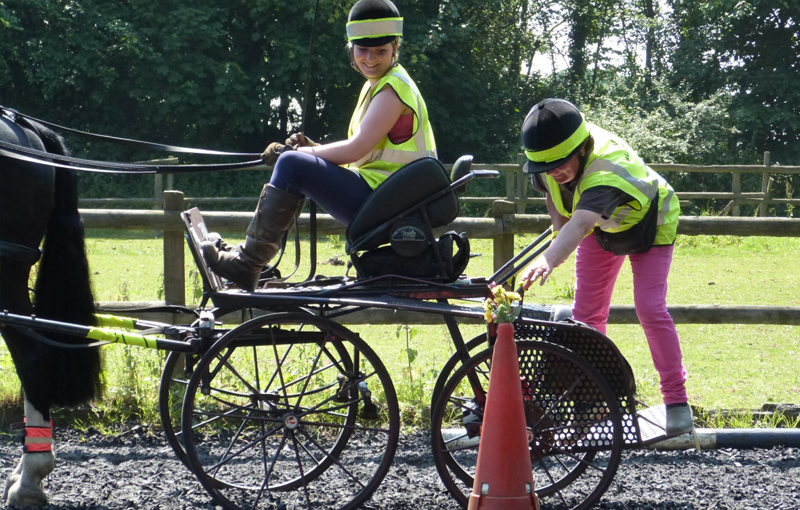
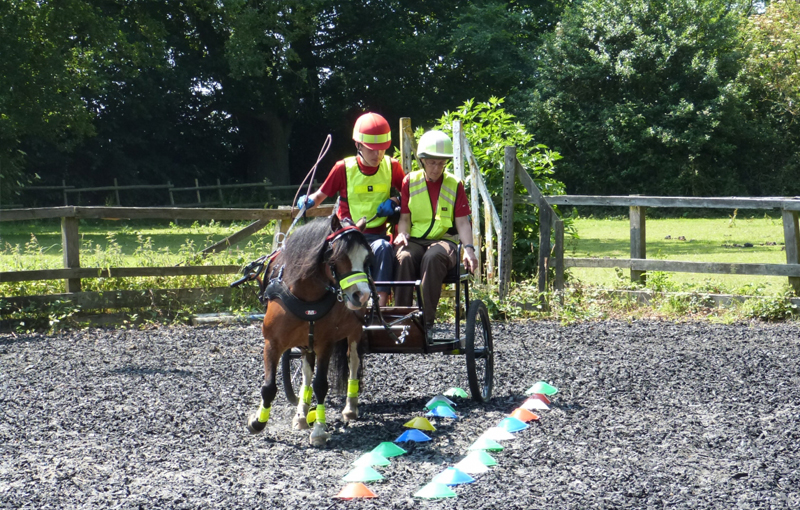
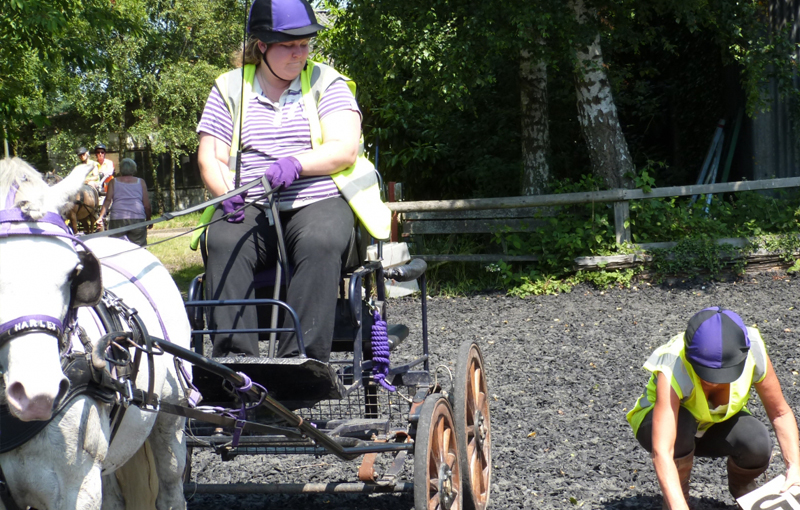
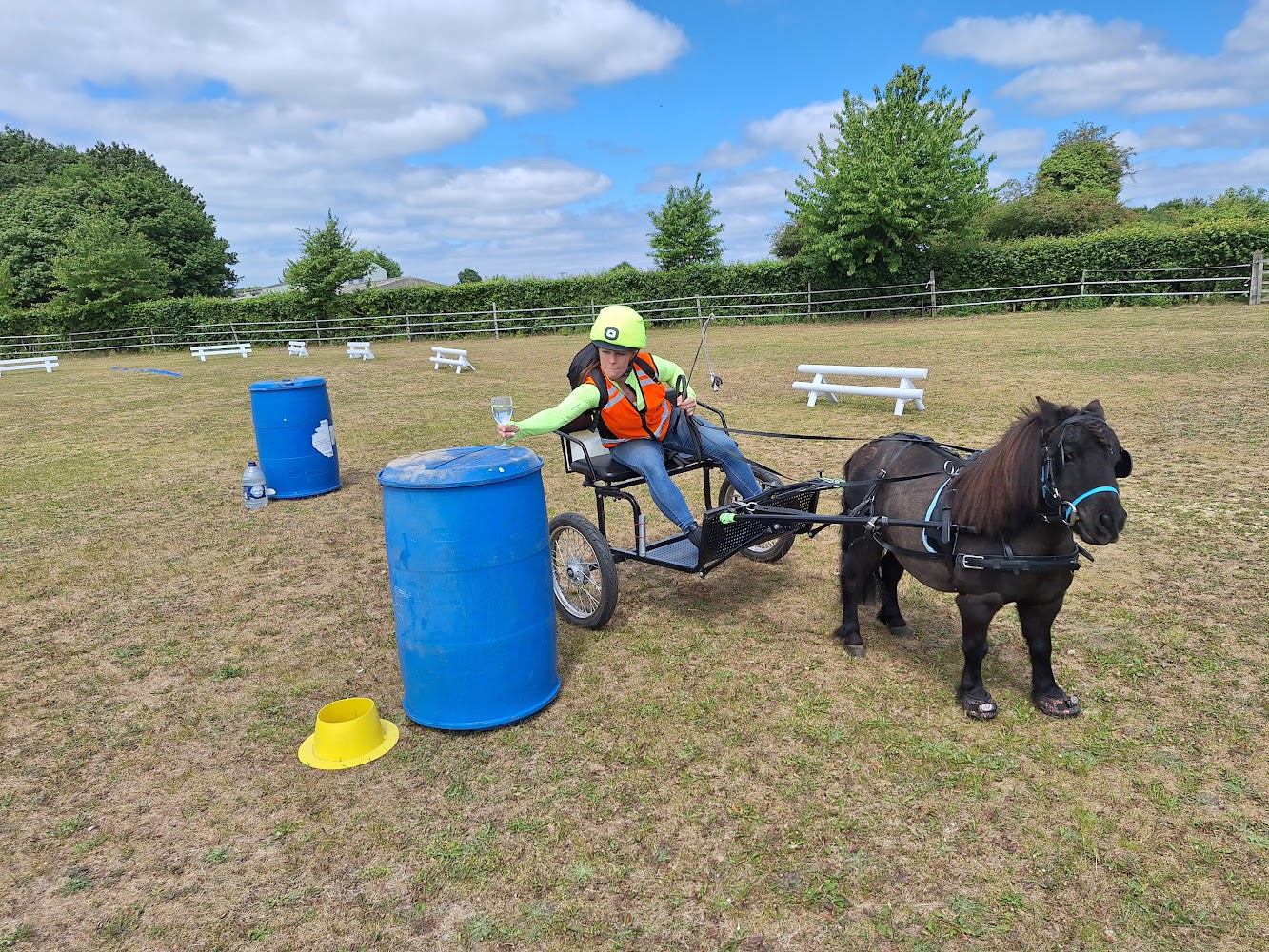
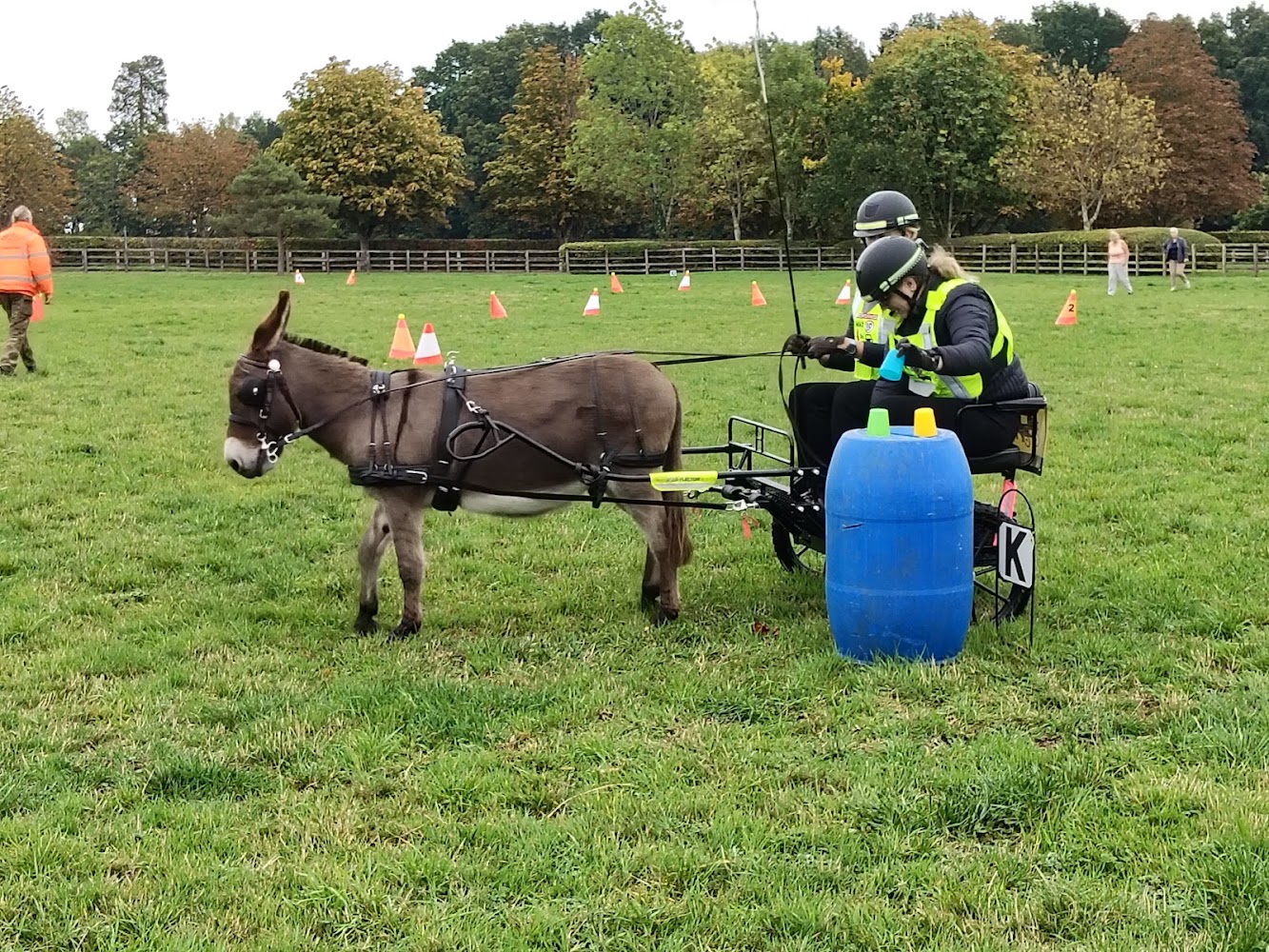
Now attempt a minimum of 5 untimed skills, with a possible 10 marks awarded for the skilful completion of each one, for example:
- Reversing alongside a straight line painted on the ground.
- Trotting a 20 metre circle, perhaps one-handed.
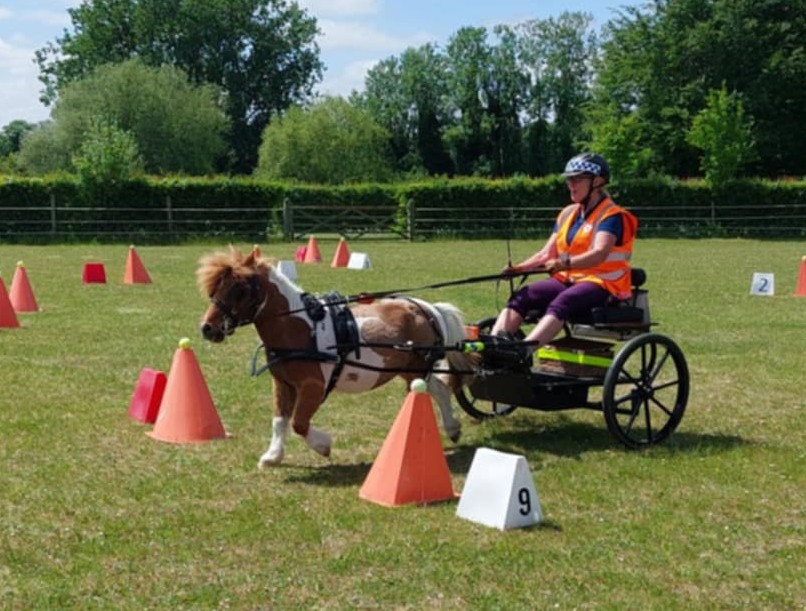
- Negotiating a cone slalom
- Complete standstill, whilst groom dismounts, walks around the turnout, then remounts the vehicle.
- Trot between 3 or 4 offset pairs of cones with balls set on top.
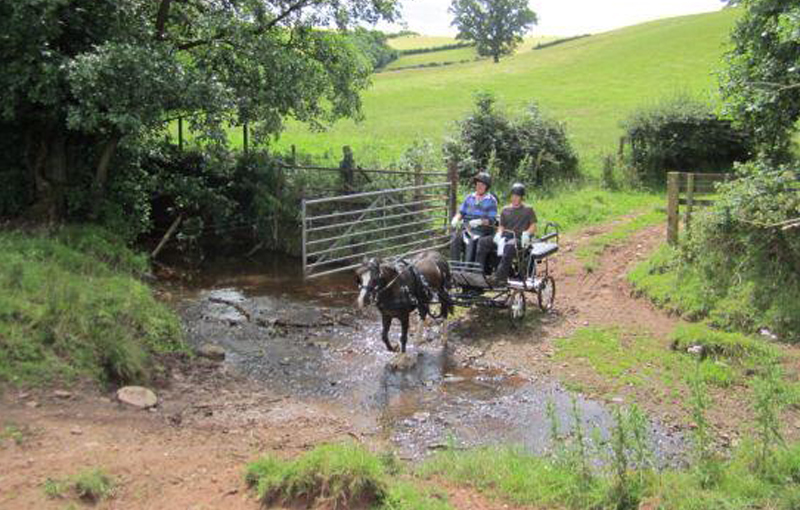
- Groom to dismount, open `gate` , for turnout to drive through , groom to remount after shutting `gate` .
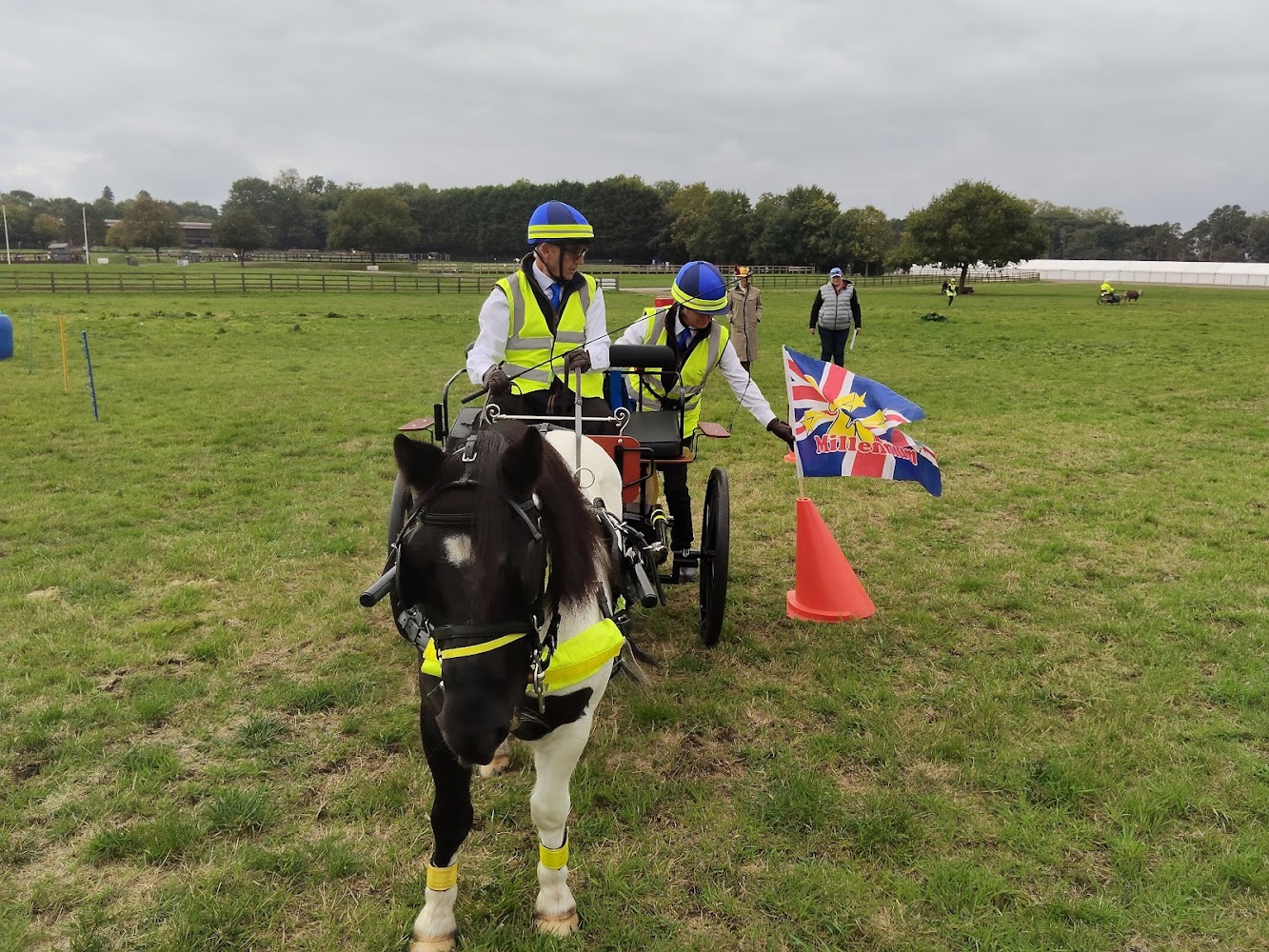
- Whilst in vehicle, groom to move flag from one cone to another.
Remember that the whole idea of Phase Three is that they are indeed `skills` and untimed, so it should be judged on how the task is tackled, how the animal reacts ie stands motionless when required or points will be deducted. Also how skilful the driver is in completing the task.

Hours of Operation
MON – FRI
10:00am – 4:00pm
SAT
Closed
SUN
We are out Driving
Telephone
01284-630591
Drop Us a Line
Don't be shy. Let us know if you have any questions!